If you’ve ever sat in a dental chair and wondered why that tiny whirring tool your dentist uses to reshape your tooth doesn’t sound like a jet engine taking off in the hallway, you’re not alone. As someone who’s been in the dental reduction handpiece game for years—talking to dentists, lab techs, and even the occasional dental student who’s just realizing not all handpieces are created equal—this is one of the most common, and most important, questions I get. Today, let’s break down the speed range of dental reduction handpieces, keep it real (no stuffy textbook jargon, promise), and tie in why this actually matters for your work, not just some random spec sheet number. Dental Reduction Handpiece

First off, let’s get one basic thing straight: “reduction handpiece” is just the fancy dental term for the tool that grinds, files, or trims tooth structure, crowns, bridges, or implants. It’s not the high-speed drill you might associate with old dental horror stories (though some high-speed ones do fall under the reduction umbrella, we’ll get to that). The speed range here isn’t a one-size-fits-all number—your average dentist’s daily needs range way more than you’d think, and picking the wrong speed for the job doesn’t just lead to uneven results, it can make your patients way more uncomfortable, even cause unnecessary damage.
Let’s start with the two main categories these handpieces fall into, because their speed ranges are totally separate: high-speed and low-speed (sometimes called slow-speed, but not in the “takes forever” way). This is where most people get confused, so let’s keep it simple.
High-speed reduction handpieces—these are the ones that do the quick, heavy lifting, like cutting through a cavity or trimming a big chunk of enamel before a crown prep. What’s their speed range? Typically, 200,000 to 500,000 revolutions per minute (RPM). Wait, that’s crazy fast, right? But here’s the thing: that speed is what lets them make clean, precise cuts without chipping the tooth, and they also keep the tip cool enough with water spray so you don’t burn the patient’s nerve. Some specialty high-speed ones can even go up to 600,000 RPM for super detailed work, like refining margin lines on a crown prep, but that’s the upper end—most standard ones stop around 500k.
Now low-speed reduction handpieces, the workhorses for most of the daily grind that doesn’t need that insane speed. These are the ones you use for things like finishing a filling, adjusting a bridge, polishing a implant abutment, or even trimming acrylic in a dental lab. Their speed range is way lower, usually between 5,000 and 35,000 RPM. Wait, why such a gap? Because slow speed means more torque, which is the pulling power to push through thicker, denser materials without the handpiece bogging down or skipping. If you tried to use a high-speed handpiece to polish a crown, it’d heat up the crown, ruin the polish, and maybe even scratch the tooth it’s sitting on. Total mess.
But here’s where a lot of newer dental professionals (or even seasoned ones who just stick to what they know) miss the mark: there’s a third category, medium-speed handpieces, that fill in the gap between 35k and 200k RPM, and they’re super useful for specific jobs. I’m talking about things like contouring composite fillings, adjusting partial dentures, or even preparing some implant sites where you don’t want the heat from high-speed. Medium-speed ranges from 35,000 to 200,000 RPM, right in the middle, and they give you the best of both worlds—enough speed for clean cuts, enough torque to handle thicker materials.
Now, let’s talk about why this speed range matters beyond just spec sheets. I’ve seen a dentist grab a high-speed handpiece to do a small adjustment on a patient’s bridge, and within 2 minutes the patient is wincing because the tip was spinning too fast, heating up the bridge and their gum. Or a lab tech use a low-speed handpiece to cut through a thick ceramic crown, and the handpiece died mid-job because it didn’t have enough torque to push through. Those are avoidable mistakes, all because you picked the wrong speed for the task.
Also, let’s get into the tech behind how these speeds are regulated, because that’s a big part of why modern handpieces are so reliable. A lot of people think all dental handpieces are powered by the same air compressor, but no—high-speed ones run on compressed air, which is why their RPM is so high; the air turbine spins the head at that insane rate. Low and medium-speed ones, though, can be air-powered or electric, and electric handpieces have gotten a lot more popular in the last 10 years because their speed is way more consistent. No more fluctuating RPM when the air compressor drops pressure mid-procedure, which is a huge win for precision. Electric reduction handpieces actually let you adjust the speed on the fly, right from the control unit, so you don’t have to swap out bits or handpieces for different parts of the job. That’s a game-changer for busy clinics that are cramming in 8 patients a day.
Wait, let’s also address a common myth I hear all the time: “faster is better.” Nope, not even close. For example, when you’re finishing a composite filling, you want a low to medium speed—too fast and the composite can overheat, pull away from the tooth, or get burned, leaving a weak spot that’ll need a redo in a year. When you’re doing a crown prep, high speed is perfect because it’s fast, the cuts are clean, and the water spray keeps heat way down. There’s a sweet spot for every single procedure, and the speed range of your handpiece is how you hit that spot.
As a handpiece supplier, I’ve worked with clinics and labs to figure out exactly what speed ranges they need, because a general dentist’s needs are way different than a lab tech or an oral surgeon. An oral surgeon might use a high-speed handpiece at the upper end (400k-500k RPM) to cut through bone during extractions, while a pediatric dentist might prefer a medium-speed handpiece for cavity prep on little kids, because it’s quieter and less intimidating for patients, even if it takes a tiny bit longer. It’s not one size fits all, which is why we offer a range of handpieces tailored to different speed ranges, not just a generic “dental handpiece” that does everything mediocre.
Let’s also touch on how speed affects the tools you use with them. Bur speed is tied directly to handpiece speed, right? A carbide bur for high-speed can handle 500k RPM, but a soft rubber polishing cup for low-speed will melt if you spin it at 100k RPM. That’s another thing we always mention to our customers—matching the bur or tip to the handpiece’s speed range, so you don’t ruin an expensive tip or, worse, hurt a patient. I’ve had a lab tech come to me with a melted polishing cup, because they grabbed a random tip and tried to use their high-speed handpiece for a polish job—total waste of money and time.
Now, let’s clear up the edge cases. What about specialized reduction handpieces, like implant reduction ones? Those have a slightly different range, usually 10,000 to 100,000 RPM, because implant sites need way more torque to cut through dense jaw bone, but not so fast that you cause bone necrosis (that’s when bone dies from too much heat, yikes). That’s a perfect example of how a specific job needs a specific speed range, not just sticking to the standard high/low categories.
Another edge case: battery-powered handpieces for mobile clinics or pop-up dental events. Those have a slightly lower RPM range, usually between 10,000 and 200,000 RPM, because battery life is a factor. But they’re still powerful enough for most general dentistry procedures, which is why they’re so popular for mobile services now. You don’t have to be tied to a wall air compressor to get a reliable range of speeds.
So, putting it all together, the speed range of a dental reduction handpiece isn’t just a number on a spec sheet—it’s a critical tool for getting good results, keeping patients comfortable, and making your job easier. The full range spans roughly 5,000 to 500,000 RPM, split into three main categories: low-speed (5k-35k RPM) for torque-heavy finishing and polishing, medium-speed (35k-200k RPM) for composite and partial adjustments, and high-speed (200k-500k RPM) for cavity prep, crowns, and hard tissue cutting.
If you’re a dentist looking to upgrade your handpieces, or a lab tech tired of handpieces that bog down or overheat, don’t just ask for “a dental handpiece”—ask about the speed ranges that fit your daily work. We’ve helped dozens of clinics swap out mismatched handpieces for ones with the right speeds, cutting down on patient discomfort, reducing redos, and making staff way happier on busy days.
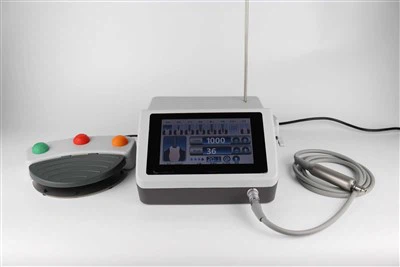
If you want to chat more about what speed range would work for your clinic or lab, hit us up to connect for a procurement consultation. We’re here to help you find the right tool for the job, no confusing jargon, no pressure to buy something you don’t need.
Dental Clinic Micromotor References:
- American Dental Association. (2022). Dental Handpiece Design and Clinical Application. Journal of the American Dental Association, 153(8), 652-660.
- Darvell, B. W. (2019). The Science of Dental Materials (3rd ed.). Churchill Livingstone.
- World Dental Federation. (2021). Guidelines for Dental Instrument Selection and Maintenance. FDI World Dental Press.
Foshan Wenjian Medical Instrument Co., Ltd.
Foshan Wenjian Medical Instrument Co., Ltd. is one of the most professional dental reduction handpiece manufacturers and suppliers in China, featured by supplying high quality medical devices. Welcome to wholesale dental reduction handpiece at competitive price from our factory. For more company information, contact us now.
Address: Workshop A, Sanyi Logistics, Shishan Town, Nanhai District, Foshan City, Guangdong Province, China
E-mail: Sales24@wenjian88.com
WebSite: https://www.chinaywjmed.com/
