As a flat top crane supplier, I get asked this question all the time—usually from first-time buyers, site managers, or even new crane operators who’ve spent their careers on hammerhead tower cranes and are still wrapping their heads around the more streamlined flat top design. When I explain the jib isn’t just a long beam sticking out of the top, their eyes usually widen, and they go, “Wait, that’s the whole point?” It’s true. For anyone in construction, the flat top crane’s jib is more than a structural component—it’s the backbone of how the crane lifts, swings, and moves materials safely across a job site, especially in tight urban areas where every foot of space matters. Let me break this down like I do with every customer who walks through our warehouse or schedules a demo. Flat Top Crane

First, let’s start with what sets a flat top crane’s jib apart from other types. Unlike a hammerhead crane, which has a separate jib and a heavy counter-jib extending the other side of the tower, a flat top crane’s jib is a single, continuous structure bolted directly to the top of the tower. There’s no outboard counter-jib sticking out, which is why “flat top” is in the name—the top of the crane (the turret where the jib attaches) sits flush, no overhang. That design choice shapes every role the jib plays, starting with load handling.
The jib’s primary job, obviously, is to support the lifting hook. Every flat top crane we supply has a maximum lifting capacity, and that number depends a lot on how far the hook is from the tower—this is called the “jib radius,” or “working radius.” At the end of the jib (the tip), the capacity is lower than it is close to the tower. For example, a 10-ton flat top crane might lift 10 tons when the hook is 10 meters from the tower, but only 2.5 tons when it’s 50 meters out. The jib’s design—its length, strength, and the way it’s engineered to distribute load—makes this possible. We use high-tensile steel in our jibs because it’s light enough to avoid putting excess weight on the tower, but strong enough to handle dynamic loads: when the crane swings, when the operator sets a load down, even when there’s a wind gust. That’s a key point I always emphasize to customers who are sizing a crane: the jib’s load curve isn’t just a number—it’s a safety feature. If the jib was weak, it would buckle under load, which is why we test every jib to 125% of its rated capacity before it leaves our facility.
Next, the jib controls operational flexibility, and that’s where flat top cranes really shine, especially in dense construction zones. The absence of a counter-jib means the entire crane’s footprint on the ground is smaller. Wait, you might think the jib extends out, so the footprint would be bigger—but no, because the counter-jib on a hammerhead takes up space on the opposite side. For a building going up in a city block where adjacent buildings are just a few feet away, being able to swing the jib without hitting the neighboring structure is non-negotiable. The jib’s length is modular, too. We can configure our flat top cranes with jib lengths from 20 meters up to 70 meters, depending on the job. If a customer is building a 10-story apartment complex in a tight downtown spot, we can use a shorter jib to keep the swing radius tight. If they’re building a 30-story office tower on an open site, we can extend the jib to reach further without setting up a second crane. That adaptability is directly tied to the jib. I had a customer last year working on a mixed-use project in Brooklyn where the site was wedged between two brownstones—they needed a crane that could lift steel beams to the 25th floor without swinging into the side of an adjacent building. We swapped out the standard 50-meter jib for a 42-meter custom-section jib, and it worked perfectly. They saved $15,000 in site space because they didn’t have to reserve area for a second crane, all because we optimized the jib.
Another critical role of the jib is housing the crane’s lifting machinery and control systems. Inside the jib, along the bottom, there’s a cable tray that holds the hoist rope, which runs from the winch (usually located on the slewing unit, right where the jib connects to the tower) up through the jib’s top, and out to the trolley that carries the lifting hook. Wait, the trolley—yes, that’s another part of the jib. The trolley moves along the jib’s length, so the operator can adjust the radius without swinging the entire crane. That’s way more efficient than a hammerhead, where the hook only moves with the jib’s rotation. On our flat top cranes, the trolley rides on a track inside the jib, and the jib’s structure is designed to support the trolley’s weight and the load it carries. Without a robust jib, the trolley would wobble, making it hard to place materials accurately—especially for things like precast concrete panels, which have to be set within a quarter-inch precision. I’ve seen customers try to save money on a cheaper crane with a flimsy jib, and end up with a trolley that shakes so bad during swing cycles, they can’t safely place drywall panels. That’s a avoidable mistake, and it all circles back to the jib’s build quality.
Now, let’s talk about safety, because that’s why every crane we supply is engineered with the jib as a safety focal point. Wind is a big risk for tower cranes, especially flat top models, because they don’t have the large counter-jib to stabilize them in high winds. The jib’s shape is aerodynamic—we curve the leading edge slightly to reduce wind resistance, which helps the crane stay stable when winds pick up. Also, the jib has wind load sensors that trigger alarms if the wind is too strong for safe operation. But beyond that, the jib’s design prevents overloading. Every jib has a load moment indicator (LMI) system that calculates the weight of the load, the radius, and the crane’s capacity in real time. If the operator tries to lift a load that’s too heavy for the current radius, the LMI cuts off the hoist. That system is mounted on the jib, so it’s close to the load, making the data more accurate. A few months ago, a customer’s operator accidentally tried to lift a 4-ton load from the edge of a 55-meter jib—our LMI system, which is integrated into the jib’s control panel, immediately stopped the hoist, and the operator got a warning. No damage, no risk of the jib failing. That’s not a fluke; it’s how we design every part, and the jib is the core of that safety system.
I also need to address a common misconception: some people think the jib is just for lifting, but it’s also key for crane dismantling. Flat top cranes are easier to take down than hammerhead cranes because there’s no heavy counter-jib to lower. The jib can be broken into smaller sections on site, or even lowered whole (if it’s not too long) with a mobile crane. When we supply a flat top crane, we walk the customer through dismantling plans, and the jib’s modularity makes that process way faster. Last year, a customer in Chicago had to take down a flat top crane after finishing a 40-story tower—they had the crane apart in half a day, compared to three days it would have taken for a hammerhead crane, all because the jib bolted into sections. That saves time and money on site, which is a big deal for construction projects that run on tight schedules.
Now, let’s tie this back to why, as a flat top crane supplier, we focus so much on the jib. A crane is only as good as its ability to perform the job safely, efficiently, and flexibly—and the jib is the center of that. If you’re a general contractor working on a urban infill project, you need a jib that can swing tight. If you’re building a large distribution center, you need a jib that can reach far without a second crane. If you’re lifting heavy precast elements, you need a jib strong enough to handle that dynamic load. We don’t just sell cranes—we engineer the jib to fit the unique needs of each job. That’s why our customers come back to us: because we don’t just provide a piece of equipment, we provide a solution built around the jib that does the work.
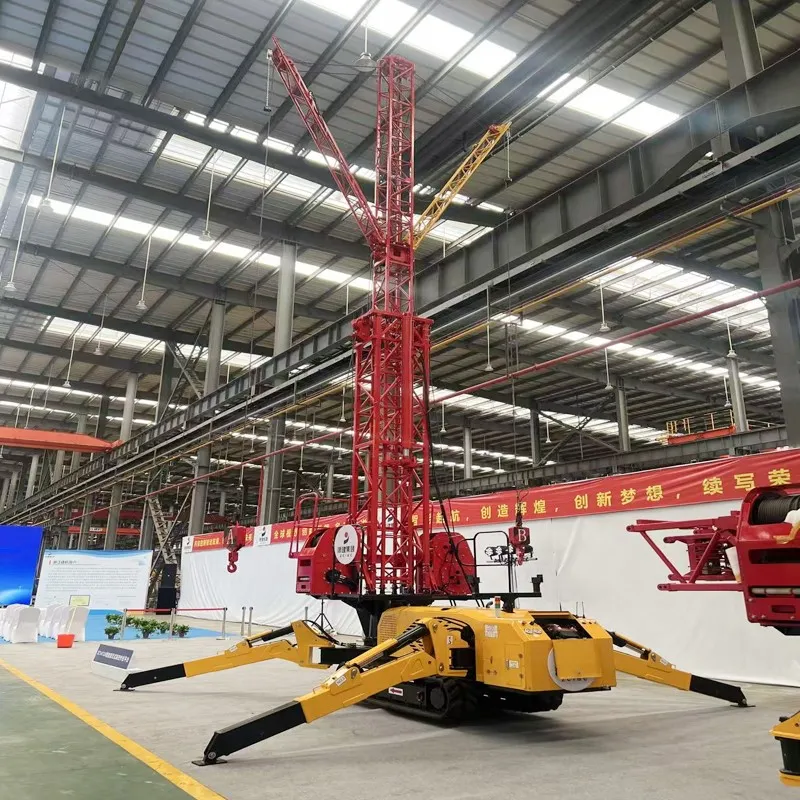
If you’re in the market for a flat top crane, whether it’s for a small residential project or a large commercial build, don’t just look at the maximum capacity numbers. Ask about the jib: its length options, its load curve, its construction, and how it handles wind and tight spaces. The jib isn’t just a part—it’s the reason a flat top crane can outperform other types in almost every modern construction setting. Let’s talk through your project needs, and we can help you find the right flat top crane with a jib tailored to your site. We’ll walk you through the specs, answer any questions, and make sure you have all the information you need to make a smart, safe choice. Don’t hesitate to reach out to connect for a procurement discussion—we’re here to support your project every step of the way.
Topkit Tower Crane References
- The Construction Safety Association of Ontario. "Tower Crane Safety: Flat Top vs. Hammerhead Design." 2021.
- International Organization for Standardization. "ISO 12488: Cranes — Tower Cranes — Safety Requirements." 2020.
- Smith, J. "Flat Top Cranes: Design and Operational Considerations for Urban Construction." Journal of Construction Equipment Technology, vol. 15, no. 2, 2022, pp. 45-62.
- European Crane Manufacturers Association. "Flat Top Crane Load Handling Best Practices." 2023.
Zhejiang Construction Engineering Machinery Co., Ltd.
Zhejiang Construction Engineering Machinery Co., Ltd. is well-known as one of the leading flat top crane manufacturers and suppliers in China. If you’re going to buy high quality flat top crane made in China, welcome to get more information from our factory.
Address: A/F, Lianjin Building, 175 Zhaohui Road, Hangzhou, Zhejiang, China
E-mail: zjcmsale2@zjjj.com.cn
WebSite: https://www.zjcmcranes.com/
