Hey there, fellow electrical enthusiasts! I’m a supplier of turn – to – turn testers, and I often get asked this burning question: "Can a turn – to – turn tester be used for three – phase transformers?" Today, I’m gonna dig deep into this topic and share my thoughts and insights. Turn-to-turn Tester
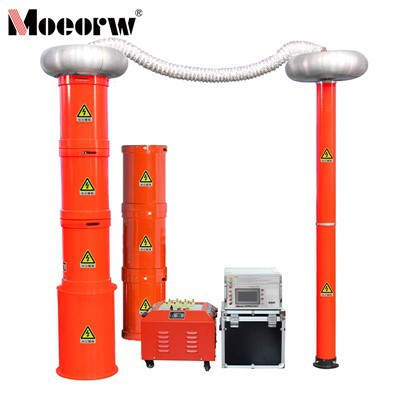
Let’s start with the basics. What the heck is a turn – to – turn tester? Well, it’s a piece of equipment that’s designed to detect short – circuits between the turns of a transformer winding. You see, in a transformer, the windings are like the heart and soul. If there’s a short – circuit between the turns, it can mess up the whole operation, cause overheating, and even lead to a complete failure of the transformer. A turn – to – turn tester helps us catch these issues before they turn into a major headache.
Now, three – phase transformers are a whole different ball game. They’re used in a wide range of applications, from power distribution in industrial settings to electrical grids. Unlike single – phase transformers, three – phase transformers have three sets of windings, each carrying a current that’s out of phase with the others by 120 degrees. This complex structure brings along its own set of challenges when it comes to testing.
So, can a turn – to – turn tester be used for three – phase transformers? The short answer is yes, but there are some things you gotta keep in mind.
First off, the design of the turn – to – turn tester matters. A good turn – to – turn tester for three – phase transformers needs to be able to handle the three – phase nature of the windings. It should be capable of applying the right kinds of test signals to each winding separately and also be able to analyze the responses from all three windings simultaneously. Some of our turn – to – turn testers are specifically engineered with this in mind. They have advanced algorithms that can quickly and accurately detect turn – to – turn faults in three – phase transformers.
Another important factor is the testing procedure. When testing a three – phase transformer, you can’t just treat it like a single – phase one. You need to test each winding independently and then also look at how they interact with each other. For example, you start by applying a test signal to one phase winding and measure the response. Then you move on to the next one. After you’ve tested all three windings individually, you can also perform some combined tests to see if there are any cross – phase issues.
Let’s talk about the benefits of using a turn – to – turn tester for three – phase transformers. One of the biggest advantages is early detection of faults. By catching turn – to – turn shorts early, you can prevent costly repairs and unplanned downtime. In an industrial setting, a transformer failure can halt production, leading to huge losses. With a turn – to – turn tester, you can regularly monitor the health of your three – phase transformers and take preventive action before things go south.
It also helps in ensuring the safety of the electrical system. A short – circuited winding in a three – phase transformer can cause uneven currents, overheating, and even electrical arcs. These can pose a serious risk to personnel and equipment. By using a turn – to – turn tester, you can make sure that the transformers are operating within safe limits.
But like any testing equipment, there are some limitations. One of the challenges is accurately interpreting the test results. The behavior of three – phase transformers can be complex, and sometimes the test results might be affected by factors like temperature, humidity, and the load on the transformer. Our technical support team is always here to help you with the interpretation of the results. We’ve trained them to understand the ins and outs of three – phase transformer testing, so they can guide you through any tricky situations.
Another thing is that sometimes the turn – to – turn tester might give a false positive or false negative result. A false positive means it indicates a fault when there isn’t one, and a false negative means it misses an actual fault. This is why it’s important to perform regular tests and compare the results over time. If you see a sudden change in the test results, it’s a red flag that something might be wrong, even if the tester hasn’t clearly indicated a fault.
Now, let’s get a bit technical about how our turn – to – turn testers work on three – phase transformers. We use a principle called the impulse frequency response analysis (IFRA). When we apply an impulse voltage to the winding, the transformer’s response is measured in the frequency domain. The shape of the response curve can tell us a lot about the condition of the windings. If there’s a turn – to – turn fault, it will cause a change in the impedance of the winding, which will show up as a distortion in the response curve.
Our testers are equipped with high – precision sensors that can capture even the smallest changes in the response signals. They also have a built – in database of normal response curves for different types of three – phase transformers. When you perform a test, the tester compares the measured curve with the reference curve from the database. If there’s a significant deviation, it means there’s likely a turn – to – turn fault.
We also understand that different customers have different needs. Some might be using small three – phase transformers in their workshops, while others might have large, high – voltage transformers in power plants. That’s why we offer a range of turn – to – turn testers with different capabilities and features. Whether you need a simple, portable tester for on – site inspections or a more advanced, automated system for continuous monitoring, we’ve got you covered.
In conclusion, a turn – to – turn tester can definitely be used for three – phase transformers. It’s a valuable tool for maintaining the health and safety of your electrical systems. But it’s important to choose the right tester, follow the proper testing procedures, and be able to interpret the results correctly.

If you’re in the market for a turn – to – turn tester for your three – phase transformers, or if you have any questions about our products, don’t hesitate to reach out. We’re here to help you find the best solution for your needs.
SF6 Gas Analyzer References
- Electrical Power Systems: Analysis and Design by J. Duncan Glover, Mulukutla S. Sarma, Thomas J. Overbye
- Transformer Engineering: Design, Technology, and Diagnostics by V. Subba Rao
Wuhan Moen Intelligent Electric Co., Ltd.
As one of the most professional turn-to-turn tester manufacturers in China, we’re featured by quality products and good price. Please rest assured to buy high quality turn-to-turn tester in stock here and get quotation from our factory. Customized orders are welcome.
Address: Building A, No.1, Fenghuangyuan 2nd Road, Donghu New Technology Development Zone, Wuhan, Hubei, China
E-mail: info@hvhipotsystem.com
WebSite: https://www.hvhipotsystem.com/
