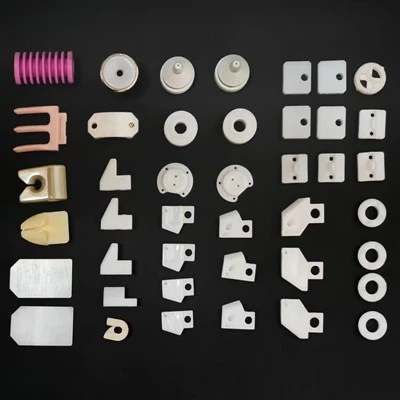
Dust is a common environmental factor that presents a significant challenge to the performance and longevity of photovoltaic equipment ceramics. As a supplier of high – quality photovoltaic equipment ceramics, I have witnessed firsthand the various impacts that dust can have on these crucial components. Photovoltaic Equipment Ceramics
Physical Abrasion and Surface Damage
One of the most immediate impacts of dust on photovoltaic equipment ceramics is physical abrasion. Dust particles, especially those with sharp edges, can act like tiny sandpaper on the ceramic surface. As the wind blows, these particles are carried across the ceramic, and over time, they gradually wear away the surface layer of the ceramic. This abrasion can lead to a roughened surface, which not only affects the aesthetic appearance of the ceramic but also has more serious implications for its performance.
The roughened surface can cause light scattering. In photovoltaic applications, the ceramic components are often designed to have a smooth and reflective surface to optimize the absorption and transfer of light. When the surface is abraded by dust, the light hitting the ceramic is scattered in different directions instead of being efficiently transmitted or absorbed. This results in a decrease in the overall light – harvesting efficiency of the photovoltaic equipment, ultimately reducing its power output.
Moreover, the physical abrasion can also create micro – cracks and scratches on the ceramic surface. These micro – damages serve as stress concentration points. In the face of environmental factors such as temperature fluctuations and thermal cycling, the micro – cracks can propagate, leading to more severe damage and potentially even the failure of the ceramic component. This means that the equipment may need to be replaced more frequently, increasing the maintenance cost and downtime for the end – users.
Chemical Reactions and Corrosion
Dust is not just composed of inert solid particles; it often contains various chemical substances. These substances can react with the ceramic material under certain conditions, leading to corrosion. For example, in industrial areas, dust may contain sulfur compounds, nitrogen oxides, and other acidic substances. When these acidic dust particles come into contact with the ceramic surface and are exposed to moisture, they can form acidic solutions.
These acidic solutions can react with the chemical components of the ceramic. For instance, if the ceramic contains metal oxides, the acid can dissolve these oxides, gradually eroding the ceramic structure. This chemical corrosion weakens the mechanical strength of the ceramic, making it more prone to breakage. Additionally, the corrosion products may accumulate on the ceramic surface, further blocking the light path and reducing the light – absorption efficiency of the photovoltaic equipment.
In coastal areas, the dust may carry a high concentration of salt particles. The salt can cause electrochemical corrosion on the ceramic surface, especially if there are any metal – containing components in the ceramic or in contact with it. The electrochemical process can accelerate the degradation of the ceramic, leading to pitting corrosion and the formation of rust – like substances on the surface, which again impairs the performance of the photovoltaic equipment.
Impact on Electrical Properties
Photovoltaic equipment ceramics often play important roles in electrical insulation and conduction. Dust accumulation on the ceramic surface can have a profound impact on these electrical properties. When dust particles accumulate on the ceramic, they can form a layer that may absorb moisture from the air. Moisture – laden dust can act as a conductor, causing leakage currents.
In a photovoltaic system, leakage currents can lead to power losses. The electrical energy that is supposed to be efficiently transferred through the system is instead dissipated through the leakage paths created by the dust – moisture layer on the ceramic. This not only reduces the overall power output of the photovoltaic equipment but also poses a safety risk. Excessive leakage currents can cause overheating, which may lead to short – circuits and even fires in extreme cases.
Moreover, the dust layer can also affect the dielectric properties of the ceramic. The dielectric constant and loss tangent of the ceramic can change due to the presence of the dust layer. These changes can disrupt the normal electrical field distribution within the photovoltaic equipment, affecting the performance of other electrical components in the system and potentially leading to malfunctions.
Impact on Thermal Management
Proper thermal management is crucial for the efficient operation of photovoltaic equipment. Ceramics are often used in heat – dissipation components of photovoltaic systems due to their good thermal conductivity. However, dust can interfere with this thermal management process.
A thick layer of dust on the ceramic surface acts as an insulator. It reduces the heat transfer rate from the ceramic to the surrounding environment. In a photovoltaic system, components generate heat during operation, and if this heat cannot be dissipated effectively, the temperature of the equipment will rise. High temperatures can have a negative impact on the efficiency and lifespan of photovoltaic cells. For example, the efficiency of silicon – based photovoltaic cells decreases as the temperature increases.
The reduced thermal conductivity caused by dust can also lead to thermal stress within the ceramic. Different parts of the ceramic may experience different temperature gradients, which can cause internal stresses. Over time, these thermal stresses can lead to cracking and deformation of the ceramic, further compromising its performance and the overall reliability of the photovoltaic equipment.
Mitigation Strategies and Our Role as a Supplier
To address the impacts of dust on photovoltaic equipment ceramics, several mitigation strategies can be employed. Regular cleaning of the ceramic components is one of the most straightforward methods. This can be done manually or through the use of automated cleaning systems. However, manual cleaning can be labor – intensive and time – consuming, while automated systems require additional investment.
Another approach is to develop dust – resistant ceramic coatings. These coatings can be applied to the ceramic surface to reduce the adhesion of dust particles. The coatings can have hydrophobic or super – hydrophobic properties, causing dust particles to be easily washed away by rain or other cleaning agents.
As a supplier of photovoltaic equipment ceramics, we are committed to developing and providing high – quality products that are more resistant to the impacts of dust. We invest in research and development to improve the surface properties of our ceramics, such as making them smoother and more resistant to abrasion. We also work on developing new ceramic materials and coating technologies that can better withstand chemical corrosion and reduce the accumulation of dust.
We understand that the performance and reliability of our photovoltaic equipment ceramics directly affect our customers’ photovoltaic systems. Therefore, we offer comprehensive technical support to our customers, helping them to choose the most suitable ceramic products for their specific applications and providing guidance on how to maintain and protect these products from the impacts of dust.
Conclusion
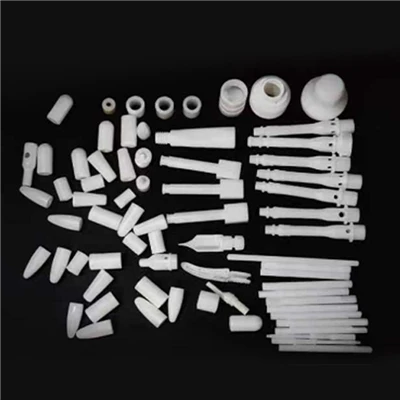
Dust has a wide range of impacts on photovoltaic equipment ceramics, including physical abrasion, chemical corrosion, changes in electrical properties, and interference with thermal management. These impacts can significantly reduce the performance, efficiency, and lifespan of photovoltaic equipment. However, through proper mitigation strategies and the development of advanced ceramic materials and technologies, we can minimize these negative impacts.
Ceramic Blades If you are in the market for high – quality photovoltaic equipment ceramics that can better withstand the challenges posed by dust, we invite you to contact us for procurement discussions. Our team of experts is ready to work with you to find the best solutions for your photovoltaic projects.
References
- "Photovoltaic Systems: Design, Installation, and Maintenance" by Smith, J.
- "Ceramics in Energy Applications" edited by Johnson, M.
- "Environmental Impacts on Photovoltaic Equipment" research report by the International Renewable Energy Agency.
Haining Yifeng Ceramic Technology Co., Ltd.
We are one of the most experienced photovoltaic equipment ceramics manufacturers and suppliers in China, also support customized service. Welcome to buy high quality photovoltaic equipment ceramics made in China here and get pricelist from our factory. For price consultation, contact us.
Address: No. 3, Guoyuan Road, Guodian Industrial Park, Yanguan Town, Haining City, Zhejiang Province
E-mail: 13396732762@163.com
WebSite: https://www.yifengcer.com/
