When it comes to manufacturing and precision engineering, the grinding quality of small-sized parts is of paramount importance. As a seasoned supplier of grinding parts, I’ve witnessed firsthand how the quality of grinding can significantly impact the performance, durability, and overall value of these components. In this blog post, I’ll share some insights and strategies on how to improve the grinding quality of small-sized parts, drawing from my years of experience in the industry. Grinding Parts

Understanding the Challenges of Grinding Small-Sized Parts
Grinding small-sized parts presents unique challenges compared to larger components. One of the primary difficulties is the need for extreme precision. Small parts often have tight tolerances, and even the slightest deviation can render them unusable. Additionally, the small size of these parts can make them more difficult to handle and secure during the grinding process, increasing the risk of damage or misalignment.
Another challenge is the generation of heat. Grinding generates a significant amount of heat, which can cause thermal damage to the part, such as micro-cracks, softening, or dimensional changes. Small-sized parts are particularly susceptible to heat-related issues due to their limited mass and surface area, which can make it difficult to dissipate heat effectively.
Selecting the Right Grinding Wheel
The choice of grinding wheel is crucial for achieving high-quality results when grinding small-sized parts. The grinding wheel should be selected based on the material of the part, the required surface finish, and the grinding operation. For example, for grinding hard materials such as carbide or ceramics, a wheel with a high grit and a hard bond is typically recommended. On the other hand, for grinding softer materials like aluminum or brass, a wheel with a lower grit and a softer bond may be more appropriate.
It’s also important to consider the shape and size of the grinding wheel. For small-sized parts, a wheel with a small diameter and a narrow width is often preferred, as it allows for more precise grinding and better control of the grinding process. Additionally, the wheel should be properly balanced to minimize vibration and ensure a smooth grinding operation.
Optimizing Grinding Parameters
In addition to selecting the right grinding wheel, optimizing the grinding parameters is essential for improving the grinding quality of small-sized parts. The key parameters to consider include the grinding speed, feed rate, depth of cut, and coolant flow.
The grinding speed refers to the rotational speed of the grinding wheel. A higher grinding speed generally results in a better surface finish, but it can also increase the risk of heat generation and wheel wear. Therefore, it’s important to find the optimal grinding speed for the specific part and material being ground.
The feed rate is the rate at which the part is moved across the grinding wheel. A higher feed rate can increase the productivity of the grinding process, but it can also lead to a poorer surface finish and increased tool wear. Conversely, a lower feed rate can result in a better surface finish, but it may also reduce the productivity of the process.
The depth of cut is the amount of material removed from the part during each pass of the grinding wheel. A larger depth of cut can increase the material removal rate, but it can also increase the risk of heat generation and tool wear. Therefore, it’s important to find the optimal depth of cut for the specific part and material being ground.
Finally, the coolant flow is crucial for dissipating heat and preventing thermal damage to the part. The coolant should be applied directly to the grinding zone to ensure effective cooling and lubrication. Additionally, the coolant should be clean and free of contaminants to prevent damage to the part and the grinding wheel.
Implementing Advanced Grinding Techniques
In addition to selecting the right grinding wheel and optimizing the grinding parameters, implementing advanced grinding techniques can also help to improve the grinding quality of small-sized parts. One such technique is creep feed grinding, which involves grinding a relatively large depth of cut in a single pass at a slow feed rate. Creep feed grinding can result in a better surface finish and higher material removal rates compared to conventional grinding methods.
Another advanced grinding technique is high-speed grinding, which involves using a grinding wheel with a high rotational speed. High-speed grinding can result in a better surface finish and higher material removal rates, but it also requires specialized equipment and expertise.
Ensuring Proper Part Handling and Fixturing
Proper part handling and fixturing are essential for ensuring the accuracy and quality of the grinding process. Small-sized parts are particularly susceptible to damage and misalignment during handling and fixturing, which can result in poor grinding quality. Therefore, it’s important to use appropriate handling tools and fixtures to secure the part in place during the grinding process.
When handling small-sized parts, it’s important to use clean, dry hands or gloves to prevent contamination. Additionally, the parts should be stored in a clean, dry environment to prevent corrosion and damage.
When fixturing small-sized parts, it’s important to use a fixture that provides a secure and stable hold. The fixture should be designed to minimize the risk of part movement or vibration during the grinding process. Additionally, the fixture should be easy to install and remove, to minimize the setup time between grinding operations.
Conducting Regular Quality Control Checks
Finally, conducting regular quality control checks is essential for ensuring the consistency and quality of the grinding process. Quality control checks should be performed at various stages of the grinding process, including before, during, and after grinding.
Before grinding, the part should be inspected for any defects or damage. The grinding wheel should also be inspected for any signs of wear or damage, and it should be dressed or replaced as needed.
During grinding, the part should be monitored for any signs of excessive heat, vibration, or chatter. The grinding parameters should also be monitored and adjusted as needed to ensure optimal grinding quality.
After grinding, the part should be inspected for any dimensional errors, surface finish defects, or other quality issues. The part should also be cleaned and examined under a microscope to detect any micro-cracks or other defects that may not be visible to the naked eye.
Conclusion
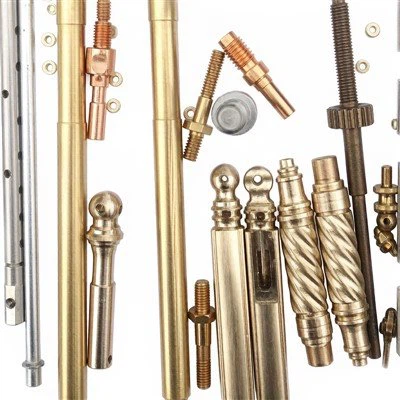
Improving the grinding quality of small-sized parts requires a combination of careful planning, proper selection of equipment and materials, optimization of grinding parameters, implementation of advanced grinding techniques, proper part handling and fixturing, and regular quality control checks. By following these strategies, you can ensure that your small-sized parts are ground to the highest quality standards, resulting in improved performance, durability, and overall value.
Precision Machined Parts If you’re in the market for high-quality grinding parts or need assistance with improving your grinding process, I encourage you to reach out to me. I’m dedicated to providing my customers with the best possible products and services, and I’d be happy to discuss your specific needs and requirements. Let’s work together to achieve the highest levels of precision and quality in your small-sized parts manufacturing.
References
- Trent, E. M., & Wright, P. K. (2000). Modern Grinding Technology. Butterworth-Heinemann.
- Sasahara, H., & Inasaki, I. (Eds.). (2018). Handbook of Machining with Grinding Wheels. Springer.
- Byrne, G., et al. (2003). Mechanics of Abrasive Machining. CIRP Annals – Manufacturing Technology, 52(2), 507-530.
Suzhou Huaquan Electromechanical Manufacturing Co., Ltd.
As one of the leading grinding parts manufacturers in China, we warmly welcome you to buy bulk customized grinding parts made in China here from our factory. If you have any enquiry about pricelist and free sample, please feel free to email us.
Address: No.7550 Mudong Road, Hengjing Town, Wuzhong District, Suzhou City, Jiangsu Province, China
E-mail: Huaquan2005@outlook.com
WebSite: https://www.huaquancnc.com/
