If you’ve ever worked with compressed air systems—whether you’re a plant maintenance manager, an industrial process engineer, or someone who specifies air treatment equipment for manufacturing, packaging, or pharmaceutical operations—you know desiccant air dryers are non-negotiable. They strip moisture from compressed air, preventing corrosion in pipes, water damage to sensitive tools, and product defects that can derail entire production runs. As a supplier of these dryers, I talk to customers every week who want to get the most out of their desiccant beds, and one question comes up more than any other: “How does the temperature we use to regenerate the desiccant impact how long it lasts?” It’s a great question, because it’s a balance: crank the heat too high, and you might destroy the desiccant; keep it too low, and you won’t dry the air effectively. Today, I want to break down this relationship, share what we’ve learned from working with real-world customers, and help you make smarter choices for your system. Desiccant Air Dryer
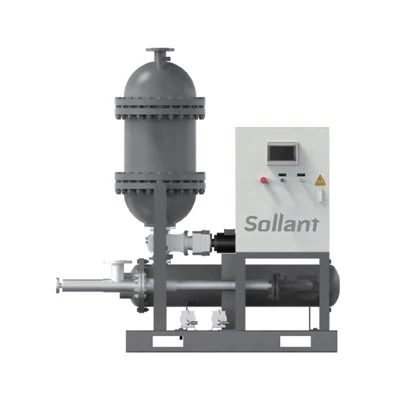
First, let’s get clear on the basics, because not everyone who uses a desiccant dryer knows the difference between adsorption (the drying part) and regeneration (the part that recharges the desiccant). When compressed air flows through a desiccant bed—most commonly made of silica gel, activated alumina, or molecular sieve—water vapor molecules stick to the desiccant’s porous surface, leaving dry air to move downstream. Once the desiccant reaches its saturation point, you can’t get more moisture out of the compressed air, so you switch to regeneration: you heat the desiccant bed and blow a small portion of dry, purge air through it to pull out the trapped water vapor, so the bed is ready to dry more air the next cycle.
That heating step is where the magic (and the risk) happens. Let’s start with what happens when regeneration temperature is too low. If you run regeneration at a temperature below the recommended range—usually between 120°C and 200°C for most common desiccants, depending on the type—you won’t pull all the trapped moisture out of the desiccant pores. Over time, residual moisture builds up in the bed, and when you switch back to adsorption, that leftover moisture leaches back into the compressed air you’re trying to dry. The result is a dryer that can’t meet your pressure dew point requirements, leading to all the problems you were trying to avoid: rust in your air lines, spoilage in food processing, or rejection of pharmaceutical products that require ultra-dry air. But here’s the less obvious part: frequent incomplete regeneration can actually shorten the desiccant’s lifespan, too. Why? Because desiccants aren’t just sponges—their porous structure is delicate. When moisture gets stuck in the tiny pores, it can condense and create internal pressure that gradually breaks down the desiccant pellets, causing them to crumble into fine dust. That dust then flows downstream, clogging filters or damaging precision equipment, and you have to replace the desiccant bed sooner than expected.
Now, the other end of the spectrum: when regeneration temperature is too high. This is where I see a lot of customers make a mistake, thinking “more heat equals more thorough regeneration, so my desiccant will last longer.” It’s the opposite. Let’s take the three most common desiccant types, because each reacts differently to high temperatures, and I can’t tell you how many times we’ve seen this firsthand. Silica gel, the most widely used desiccant, is amorphous silicon dioxide. Its porous structure is stable at moderate temperatures, but when you heat it above 200°C, the hydroxyl groups (the chemical groups that bond with water molecules) start to break down. Over multiple regeneration cycles, this breakdown weakens the desiccant, causing the pellets to shrink, crack, and turn to dust. We had a customer in the automotive parts industry who was running their regeneration at 250°C because their previous dryer supplier told them it would “make the desiccant last twice as long.” Six months later, their desiccant bed was almost 30% dust, and they had to replace the entire bed—plus repair a clogged air dryer filter that cost them thousands in downtime. That’s not an outlier. Molecular sieves, used for ultra-dry air applications like aerospace or electronics manufacturing, are even more sensitive. When heated above 230°C, their crystalline structure (which is what makes them able to trap very small water molecules) can degrade permanently, closing off the tiny pores that do the drying. Once that structure breaks, a molecular sieve can’t be reactivated—even if you run it at the correct temperature later. Activated alumina is a bit more forgiving, but even it starts to degrade above 250°C, losing its adsorption capacity and becoming more brittle over time.
So, what’s the sweet spot? The ideal regeneration temperature is specific to the type of desiccant you’re using, and also to your operating conditions—like your compressed air flow rate, pressure, and how often you cycle the dryer. For silica gel, most manufacturers (and we recommend the same) suggest a regeneration temperature between 150°C and 180°C. For molecular sieves, it’s 180°C to 220°C, and for activated alumina, 140°C to 200°C. But here’s another key point: it’s not just about the set temperature on your dryer’s controller. You have to make sure that temperature is actually reaching the entire desiccant bed. Some dryers have hot spots where the air flow is uneven, so parts of the bed get too hot, and parts don’t get hot enough. Over time, those hot spots will cause localized desiccant degradation, even if you’re staying within the overall temperature range. That’s why we design our dryers with uniform air distribution systems—something a lot of lower-cost competitors skip—and we offer thermal mapping as a service to customers who want to confirm their beds are being heated evenly.
Another factor that ties into regeneration temperature is purge air flow. Purge air is the small amount of dry air that flows through the desiccant bed during regeneration to carry away the moisture. If you run at the correct temperature but use too little purge air, the moisture that’s pulled out of the desiccant stays in the bed, even if the temperature is right. It’s like trying to dry clothes in a stuffy room with no fan—they’re warm, but they never fully dry. Conversely, too much purge air means you’re wasting energy heating air that doesn’t need to be at that temperature, and you might end up cooling the bed too quickly before the regeneration cycle is done, leading to residual moisture. We work with every customer to tune the purge air flow and regeneration time to their specific load, which helps extend desiccant life without sacrificing performance.
I mentioned earlier that we’ve seen customers go wrong with temperature extremes, but I want to share a success story too, because it shows how getting this right pays off. A food processing client of ours, who uses compressed air to power packaging lines for frozen vegetables, was going through desiccant beds every 12 months. They were running their regeneration at 190°C, which is on the higher end for silica gel, and their air distribution was uneven. We did a thermal mapping test, adjusted their dryer’s controller to hold a consistent 170°C, fixed a small blockage in the air flow manifold, and worked with their maintenance team to set a schedule for checking the desiccant bed’s dust level quarterly. Two and a half years later, they’re still on the same desiccant bed, and their pressure dew point has stayed steady at -40°C—well above their requirements. That’s a return on investment that’s impossible to ignore: less downtime, lower replacement costs, and consistent product quality.
Wait, but what about other variables that impact desiccant lifespan, like air pressure or the amount of moisture in the incoming compressed air? Of course, those matter, but regeneration temperature is the single most controllable factor that directly impacts how long the desiccant bed lasts. Think of it like baking a cake: if you set the oven too low, it takes too long to cook and might be underdone; too high, it burns. The temperature is the core variable that determines the outcome, regardless of the recipe. The same goes for desiccant regeneration.
I also want to address a common misconception: some people think that if they use a heatless desiccant dryer, which uses vacuum or pressure swing instead of heated regeneration, they don’t have to worry about temperature. While heatless dryers operate at lower temperatures (usually around 20°C to 40°C during regeneration), they have their own trade-offs: they use a lot more purge air, which increases operating costs, and the desiccant still has to be heated slightly during the pressure swing to release moisture. Even with heatless dryers, the temperature during the desorption phase impacts how long the desiccant lasts—just in a different way than heated dryers.
So, if you’re reading this and wondering, “How do I know if my regeneration temperature is right for my desiccant?” here are a few steps you can take. First, check your desiccant manufacturer’s data sheet—they’ll have a recommended temperature range based on their product’s formulation. Second, check your dryer’s controller to make sure the set temperature matches the actual bed temperature. Many controllers show the outlet air temperature, not the bed temperature, so you might be underheating the bed without realizing it. Third, monitor your desiccant bed’s performance: if you’re seeing higher pressure dew points, more dust in your air lines, or needing to replace the bed every 18 months or less, it’s likely a temperature or flow issue.
At the end of the day, our job as a desiccant air dryer supplier isn’t just to sell you a piece of equipment—it’s to help you get the longest possible lifespan out of your desiccant, reduce your operating costs, and keep your process running smoothly. If you’re struggling with desiccant degradation, unsure about your regeneration temperature settings, or just want to optimize your system, we’re here to help. We work with customers across every industry to audit their dryers, tune their operating parameters, and make sure they’re getting the most value from their desiccant beds.

If you have questions about regeneration temperature, desiccant lifespan, or need support optimizing your desiccant air dryer, we’re ready to help you discuss your specific needs.
Nitrogen Generator References
- ASTM International. Standard Practice for Pressure Swing Adsorption (PSA) Gas Drying. ASTM D7792-19.
- Ruthven, D. M. Principles of Adsorption and Adsorption Processes. John Wiley & Sons, 1984.
- Inoue, T., et al. “Thermal Degradation of Silica Gel and Molecular Sieves for Desiccant Air Dryers.” Journal of Chemical Engineering of Japan, vol. 42, no. 10, 2009, pp. 721-727.
- Compressed Air and Gas Institute (CAGI). Desiccant Air Dryer Performance and Life Expectancy Guidelines, 2021.
- Yang, R. T. Gas Separation by Adsorption Processes. Butterworth-Heinemann, 1997.
Shanghai Sollant Energy Saving Technology Co., Ltd.
As one of the most professional desiccant air dryer manufacturers and suppliers in China, we’re featured by quality products and good service. We warmly welcome you to buy bulk advanced desiccant air dryer from our factory. If you have any enquiry about cooperation, please feel free to email us.
Address: No.215, Songri Center, Beihongqiao, Jiading District, Shanghai, China
E-mail: info4@sollant.com
WebSite: https://www.sollanttreatment.com/
