If you’ve ever stood in a lab watching a scientist rinse a glassware, or sipped water from a bottle labeled “distilled,” you’ve encountered pure water—though you might not have realized how many different types of pure water systems exist to create it. As a supplier who’s spent the last decade troubleshooting, installing, and refining these systems for everything from biotech startups to food processing plants, I can tell you that one size never fits all. Choosing the wrong system doesn’t just waste money; it can ruin experiments, contaminate batches, or even put consumers at risk. Let’s break down the main types of pure water systems, how they work, and when you’d need each one—straight from the perspective of someone who’s seen both the small wins and the big mistakes in this space. Pure Water System

Let’s start with the most basic: distilled water systems. You’ve probably seen these at home or in old-school chemistry labs, and for good reason. Distillation works by heating water until it turns to steam, then cooling that steam back into liquid, leaving behind solid contaminants like heavy metals, minerals, bacteria, and even some chemicals that boil at lower temperatures than water. The biggest upside here is simplicity—distilled water is about as pure as it gets for non-industrial use, with total dissolved solids (TDS) usually below 10 parts per million (ppm). But it’s not perfect. Distillation is slow, and it wastes a lot of water—for every gallon of distilled water you get, you’re throwing away 3 to 4 gallons of unprocessed water. That makes it less popular for large-scale operations, though it’s still a go-to for small labs or even at-home humidifiers where consistency is key. I once worked with a small molecular biology lab that relied entirely on a distillation system for their PCR tests; switching to any other system felt too risky, since even a tiny amount of impurity would mess up their DNA samples. That said, distillation can miss some volatile organic compounds (VOCs) that boil at the same temperature as water, so it’s not the right pick for every application.
Next up: reverse osmosis (RO) systems, which are probably the most recognizable pure water systems for commercial and industrial use today. RO works by forcing water through a semipermeable membrane with tiny pores—so small, in fact, that they block 95 to 99 percent of contaminants, including salts, bacteria, lead, and pesticides. Unlike distillation, RO is much more water-efficient, wasting only about 1 to 2 gallons per gallon of pure water, depending on the model. What I love most about RO is its flexibility. You can install a small under-sink RO system for a café that needs clean water for espresso, or a large industrial RO system that supports a whole manufacturing plant. But RO also has limits. It doesn’t remove very small molecules like some VOCs, or minerals like silica, and it produces water that’s still not pure enough for high-stakes uses like pharmaceutical manufacturing or lab analytical work. I’ve had clients who installed RO systems thinking they’d solved all their water purity issues, only to find that their final products had trace amounts of VOCs that the RO membrane missed—so I always tell customers to test their water’s specific contaminants before locking in on RO.
For that next level of purity, you get deionization (DI) systems. DI works by passing water through resin beads that attract and swap out charged ions—meaning it strips away almost all charged minerals, like sodium, calcium, and chloride. Where RO might leave a small amount of these ions, DI takes it to near-zero levels, making it perfect for lab use, pharmaceutical compounding, and even battery manufacturing where ion contamination can ruin products. DI comes in two main types: mixed-bed DI and single-bed DI. Mixed-bed DI is the high-purity workhorse, combining both positive and negative resin beads to remove almost every charged ion, producing water with TDS below 1 ppm. Single-bed DI is for less demanding uses, like pre-treating water before it goes into an RO system to extend the membrane’s life. But DI isn’t without its drawbacks: the resin beads get exhausted over time and need to be replaced or regenerated, which adds ongoing costs, and it doesn’t remove uncharged contaminants like bacteria or VOCs. I once had a tech company that used single-bed DI water to clean electronic parts, but they didn’t realize the DI system was missing small amounts of VOCs from their tap water—within a month, their parts had a tiny coating that caused a 10% defect rate. Adding a small activated carbon pre-filter fixed the problem, but it taught me to never sell a DI system without mapping out exactly what’s in the incoming water.
Now, if you need the gold standard for purity: ultrapure water (UPW) systems. These are the most complex, expensive, and specialized pure water systems, designed for uses like semiconductor manufacturing, clinical diagnostics, and injectable pharmaceuticals. UPW has a TDS level so low it’s almost undetectable, and it also removes every other trace contaminant—bacteria, viruses, endotoxins, VOCs, even organic molecules that could interfere with sensitive processes. A full UPW system usually combines multiple stages: RO to remove large contaminants, DI to strip ions, ultrafiltration to catch bacteria and viruses, and sometimes UV disinfection or activated carbon polishing to remove the last bits of organic material and microcontaminants. I installed a UPW system a few years ago for a semiconductor plant making microchips for smartphones; their final process step required water so pure that a single particle of contamination would ruin an entire wafer. The system cost six figures, but the plant couldn’t operate without it—even a 10-minute power outage in their UPW loop would force a full shutdown, costing them millions. The downside of UPW is obvious: it’s not for everyone. For a small biotech lab or a food and beverage plant, it’s overkill, and the operating costs would be way higher than necessary.
Wait, there’s another type I almost forgot: ultrafiltration (UF) systems. A lot of people mix these up with RO, but they work differently. UF uses membranes with slightly larger pores than RO, so they block larger particles like bacteria, viruses, and colloidal solids, but they let small ions and minerals pass through. That makes UF ideal for applications where you want to keep some beneficial minerals but remove microbial contamination, like in dairy processing or bottled mineral water. I recently worked with a craft dairy that used a UF system to purify their water for cheese making; it removed the bacteria that caused batch spoilage, but kept the small amount of natural minerals that added flavor to their cheese. UF is also more energy-efficient than RO, since it doesn’t need high pressure to force water through the membrane, which is a big plus for operations looking to cut energy costs.
Let’s talk about what all these systems have in common, because there’s a common misconception that “more pure” means better. I’ve had customers come to me asking for the most expensive system we have, only to find out their needs don’t require it. For example, a local brewery once insisted on a UPW system for their beer, when an RO system would have been more than enough—UPW would have stripped all the natural minerals that give their beer its distinct taste. We adjusted the recommendation, saved them thousands in upfront and operating costs, and their beer quality stayed the same. That’s the key to choosing the right pure water system: start with your specific use case, test your incoming water, and map out exactly what contaminants you need to remove.
I also can’t talk about pure water systems without mentioning the maintenance side, because even the best system won’t last if you don’t take care of it. Distillers need their heating elements cleaned regularly to prevent mineral buildup, RO membranes need to be flushed periodically to prevent clogging, DI resins need to be tested for exhaustion, and UPW systems have strict monitoring requirements to ensure purity levels stay consistent. That’s why as a supplier, we don’t just sell systems—we provide ongoing maintenance checks, water testing, and replacement parts. I’ve seen way too many operations buy a cheap system, skip maintenance, and end up with contaminated products that cost them way more than a high-quality, well-supported system would have.
If you’re wondering which system is right for your business, here’s a quick cheat sheet to recap: if you need small volumes for a lab or home, go with distillation. For commercial applications like cafes, restaurants, or light manufacturing, RO is your sweet spot. For labs, pharmaceuticals, or electronics cleaning with strict ion requirements, DI is the way to go. For high-stakes industries like semiconductors or injectable drugs, you need UPW. And for food and beverage where you need to keep beneficial minerals or remove only microbial contaminants, UF is the best bet.
At the end of the day, pure water systems aren’t one-size-fits-all. Each type is designed for a specific need, and picking the wrong one can lead to wasted money, product defects, or even safety issues. Whether you’re a small lab looking for reliable distilled water, a food manufacturer needing consistent RO water, or a large industrial operation requiring specialized UPW, the right system is out there—you just need to match it to your needs.
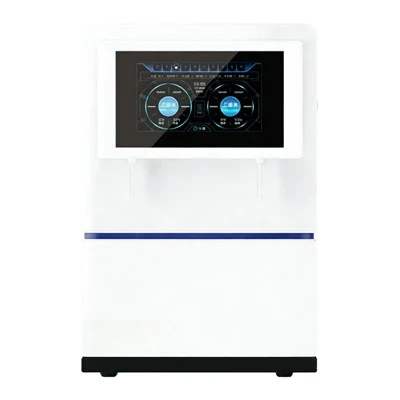
If you’re unsure which pure water system is right for your operation, I’d be happy to walk through your requirements, review your water test results, and recommend a solution that fits your budget and performance needs. Feel free to reach out to us directly to start a conversation about your project.
Tubular Modules References
American Society for Testing and Materials. (2021). Standard Practice for Purified Water and Water for Injection for Pharmaceutical Use. ASTM International.
World Health Organization. (2022). Guidelines for Drinking-Water Quality (4th ed., addendum). WHO Press.
Lindsay, S. (2019). Water Treatment for Industrial and Commercial Applications. CRC Press.
Hangzhou Nanoimp Environmental Technology Co., Ltd.
With abundant experience, we are one of the most professional pure water system manufacturers and suppliers in China. Welcome to wholesale high quality pure water system in stock here and get pricelist from our factory. We also accept customized orders.
Address: Road 25, Baiyang Street, Qiantang District, Hangzhou City, Zhejiang Province
E-mail: keith.wang@nano-sepmer.com
WebSite: https://www.nanoimp-membrane.com/
