Hey everyone, it’s Jake, here from the activated carbon filter paper side of things. Today I want to talk about a question I get at least twice a week from industrial folks: Can activated carbon filter paper actually hold its own when it comes to treating industrial exhaust gas? Spoiler—yes, it can, but there’s a lot more to it than just slapping a roll of this stuff on a vent and calling it a day. I’ve been selling this material for 7 years now, seen everything from small metal shops to big food processing plants test it out, so let’s break it down like I would with a client calling in panicking about a new emissions rule. Activated Carbon Filter Paper
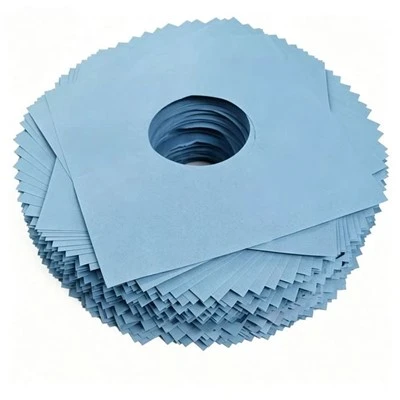
First, let’s get one thing straight—industrial exhaust isn’t the same as the air coming out of your kitchen range hood or a home air purifier. You’ve got all kinds of junk in there: volatile organic compounds (VOCs) from painting or coating lines, particulate matter (PM) from metal grinding or powder coating, even funky stuff like odor-causing compounds from food processing or wastewater plants. Activated carbon filter paper isn’t just plain carbon paper like what you used in old school printers. It’s a substrate—usually cellulose or polyester fiber—coated or impregnated with activated carbon particles that have those tiny, porous surfaces that grab onto nasty molecules. That’s the key. The pores can be adjusted depending on what you’re dealing with, which is why it works for so many different industrial setups.
Let’s run through the good stuff first, because that’s what most engineers want to know. One of the biggest wins for activated carbon filter paper in industrial exhaust is how it handles multiple pollutants at once. A lot of industrial processes don’t just emit one bad thing—like a car body shop sanding and painting might put out both paint mist (particulates) and VOCs like toluene or xylene, plus maybe some solvent odors. Our filter paper can catch the particulates first (the fiber layer traps those bigger particles) and then the activated carbon layer adsorbs the VOCs and odors right after. I had a client in Phoenix last year that was using separate filters for each pollutant, costing them twice as much in replacement parts and downtime. Switched to our multi-layer activated carbon filter paper, cut their filter changes from every 2 weeks to every 6 weeks, and their emissions test results went from barely passing to blowing the limit out of the water. That’s real cost savings right there, which is huge for factories running 24/7.
Then there’s the space factor. A lot of industrial facilities are stuck with tight ductwork or budget crunches that mean they can’t install big, bulky scrubbers or carbon towers. Our filter paper is thin—usually between 1mm and 5mm thick, depending on the grade—and can be cut or formed to fit almost any existing vent or duct. I had a small metal stamping shop in Detroit that didn’t have room for a 10-foot tall carbon tower, so we made custom filter paper mats that fit right into their existing ventilation system slots. They didn’t have to do any major retrofitting, saved thousands on installation, and got the emissions control they needed to meet OSHA rules. That’s a game-changer for small to mid-sized manufacturers that can’t drop $50k on new equipment.
But wait, it’s not all sunshine and low replacement costs. I can’t sell this stuff without being upfront about the limitations, because if I don’t, my clients will end up frustrated and come back asking for a refund. First off, activated carbon gets “full” after a while. That’s called breakthrough—when all the pores are clogged with pollutants, so the carbon can’t grab any more, and bad stuff starts passing right through. How long that takes depends on the concentration of the exhaust, the flow rate, and what kind of pollutants you’re removing. For a low-flow, low-VOC exhaust like a small food dehydrator, our filter paper can last 3+ months. For a high-flow, high-VOC line like a spray booth running 12 hours a day, that’s more like 2 weeks. I always tell clients to track their pressure drop across the filter—when it gets too high (usually around 1000 Pascals for exhaust systems), that means it’s time to change it, either because the particulates clogged the fiber layer or the carbon is full.
Another limitation: it’s not great for super high-temperature exhaust. If your exhaust is over 120°C (248°F), the cellulose in the substrate breaks down, and the activated carbon’s adsorption capacity drops because the heat makes the pollutant molecules move too fast to stick. I had a client with a metal forging operation try to use our standard filter paper for their exhaust, and it started falling apart after 2 days. We switched them to our high-temperature polyester-based activated carbon filter paper, which can handle up to 180°C, and that fixed the problem. So grade matching is everything—you can’t use the same paper for a 50°C paint booth and a 150°C metal furnace.
Also, activated carbon filter paper works best for certain types of VOCs. It’s super good at non-polar compounds—think solvents, odors, most industrial VOCs. But if you’re dealing with polar compounds like ammonia or formaldehyde in really high concentrations, standard activated carbon might not cut it. We make modified versions with acid or base impregnation that can handle those, but you have to tell us exactly what’s in your exhaust upfront. I once had a wastewater treatment plant call in saying their odor control wasn’t working, and they were using our standard paper for ammonia. We swapped them for our amine-impregnated filter paper, and the odor complaints from the surrounding neighborhood dropped 90%. Lesson learned: test your exhaust composition first, don’t guess.
Now, let’s talk about real-world use cases to make this concrete. I’ve got three clients that are still using our activated carbon filter paper for exhaust treatment after 3+ years, so they’re the success stories. First, that Phoenix auto body shop I mentioned earlier—they’ve got 12 spray booths, all fitted with our 3-layer activated carbon filter paper, replacing the final stage in their ventilation system. They do quarterly emissions tests, and they’ve never failed in the 3 years we’ve worked together. Second, a craft brewery in Colorado that was having issues with malt odors and yeast byproduct VOCs coming from their fermentation tanks. They tried activated carbon filters in tanks, but those got too messy and hard to change. Switched to our roll-style activated carbon filter paper, mounted along the vent ducts of each tank, and now their tasting room doesn’t smell like a basement brewery anymore—customers say it smells fresh. Third, a small electronics manufacturer that has wave solder machines putting out solder fumes and VOCs. Their old filters were made of plain fiberglass, which did nothing for the odors. Our filter paper catches the solder particulates and adsorbs the acrolein and other fumes, so their employees don’t complain about headaches anymore, which reduced their workers’ comp claims by a lot.
What about myths I hear all the time? Let’s bust them. Myth #1: Activated carbon filter paper is just for air purifiers. No, it’s industrial-grade, made to handle continuous, high-flow exhaust, not just a bedroom air purifier that runs 8 hours a day. Our industrial paper uses higher-quality activated carbon, more durable substrates, and can handle much higher volumes. Myth #2: It’s too expensive compared to other options. Wait, compared to scrubbers or carbon towers that have high upfront costs, our filter paper’s upfront cost is way lower. And while replacement costs add up, the labor to change a filter mat is way less than maintaining a tower or scrubber system. Myth #3: It doesn’t last long enough to be worth it. As I said earlier, it depends on the application, but for most medium-flow industrial exhaust, it lasts 1-2 months, and that’s way better than the alternatives for space and cost.
One thing I always emphasize with new clients: testing is non-negotiable. I never just sell a roll and walk away. We always recommend sending us a sample of your exhaust (or having you run a quick test with our small-scale filter paper samples) to see how it performs. I had a plastics factory in Ohio that thought their exhaust was just VOCs from melting plastic, but when we tested it, there was a lot of fine particulate that was clogging their filters fast. We added a pre-filter layer to our activated carbon paper, and that extended the filter life by 40%. That’s the kind of customized thing that makes this work, not a one-size-fits-all approach.
Now, what’s the future look like for activated carbon filter paper in industrial exhaust? I’ve seen demand go up 30% in the last 2 years because of stricter emissions rules around the world, especially in the US and EU. More factories are moving away from bulky, old systems to more flexible, cost-effective solutions like our filter paper. We’re also working on newer grades that can handle even higher temperatures, and modified carbon that works on more polar compounds, which will open it up to more industries like chemical manufacturing and fertilizer production.
At the end of the day, the answer to “Can activated carbon filter paper be used in industrial exhaust gas treatment?” is a resounding yes—but only if you pick the right grade, match it to your specific exhaust composition and flow rate, and do regular maintenance (changing filters when pressure drop gets too high, not waiting until you can smell stuff). It’s not a silver bullet, but it’s one of the most versatile, cost-effective options out there right now for small to mid-sized manufacturers, or facilities that don’t have the space for big control systems.
If you’re dealing with exhaust issues—whether you’re failing emissions tests, having odor complaints, or just spending too much on filter replacements and maintenance—hit us up to chat about what grade would work best for your setup. We don’t do pushy sales tactics; we’ll run the numbers, test your exhaust, and even help you figure out maintenance schedules to make sure you get the most out of the filter paper. No pressure, just real advice from someone who’s been in this game for years, talking to fellow factory owners and operators who just want to do right by their employees and stay compliant.
Activated Carbon Filter Paper References:
- American Industrial Hygiene Association. (2021). Guide to Industrial Ventilation Emission Control Technologies. AIHA Press.
- adsorption.org. (2022). Activated Carbon Adsorption for Industrial Gas Treatment. Global Activated Carbon Association.
- OSHA. (2023). Industrial Exhaust Gas Control: Best Practices for Small Manufacturing Facilities. Occupational Safety and Health Administration.
- Journal of Environmental Engineering. (2020). Performance of Activated Carbon Filter Media for Mixed Pollutant Industrial Exhaust. ASCE Publications.
Shanghai Rongying Industrial Co., Ltd.
As one of the most professional activated carbon filter paper manufacturers and suppliers in China, we’re featured by quality products and good price. Please rest assured to wholesale customized activated carbon filter paper from our factory. If you have any enquiry about quotation and free sample, please feel free to email us.
Address: Jiahua Business Center C building 204 room, No.808 Hongqiao Road,Xuhui District,Shanghai,China
E-mail: info@shryspecialtypaper.com
WebSite: https://www.woolpaper.com/
