Hey everyone, if you’ve ever worked in transformer maintenance or heavy electrical assembly, you know how critical transformer clamps are. These unsung heroes hold big, expensive transformer components tight, make sure connections stay secure, and prevent costly leaks or failures. As someone who’s been supplying transformer clamps for over 10 years, I get tons of questions from customers: “Can I calibrate my existing clamps?” or “If they’re out of spec, do I need to buy new ones?” It’s a question that pops up all the time, and today I’m breaking it down straight—no jargon, just real talk from someone who’s on the supply side of this gear every day. Transformer Clamp
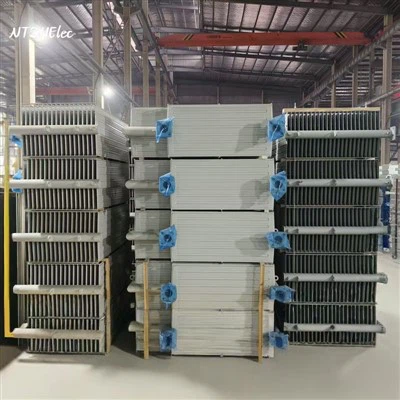
First, let’s get clear on what we’re talking about here. Transformer clamps aren’t just metal brackets; they’re precision tools designed to apply consistent, even force across transformer windings, core assemblies, and tank connections. Calibration, in basic terms, means adjusting that clamp force to match the manufacturer’s specs—too little force and components shift, leading to partial discharges or winding damage; too much and you warp bus bars, damage insulation, or strain the tank walls.
Now, the big question: Can you calibrate a transformer clamp? The short answer is… it depends. Not all clamps are built the same, and that makes all the difference. Let’s break down the two main types of clamps we supply, because this is where it gets practical.
First, there’s manual mechanical clamps. These are the workhorses we’ve been making for decades—heavy-duty steel, threaded rods, wing nuts, and sometimes spring-loaded mechanisms. A lot of older transformer fleets use these, and they’re super durable, but can you calibrate them? Sort of, but it’s not like calibrating a torque wrench in your garage. These clamps rely on consistent tension from the threaded fasteners and spring preload. Over time, threads can wear, springs fatigue, or the bracket can bend a little from repeated use. You can adjust the wing nuts to add or remove force, but how do you know you’re getting it right? That’s the catch. For manual clamps, “calibration” usually means tension testing each clamp with a force gauge while the transformer is unloaded. You have to remove the clamp first, set up a gauge between the bracket and the component, adjust the nut until you hit the recommended force, then reinstall. It’s doable, but it’s labor-intensive—especially if you have a bank of 20+ clamps on a medium-sized transformer. We’ve had customers do this successfully, but most find that once a clamp starts showing signs of wear (like loose threads or spring sag), calibration is a band-aid, not a fix. That’s where the second type comes in.
Second, there’s our modern hydraulic and pneumatic actuated clamps. These are the ones we’ve been pushing more of lately because they solve a lot of the calibration headaches. These clamps have built-in pressure gauges, pressure relief valves, and sometimes even digital force sensors. Can you calibrate these? Absolutely, and it’s way more reliable. The key here is that hydraulic/pneumatic clamps work on a simple principle: a consistent pressure creates a consistent force. So calibration for these usually means verifying that the pressure gauge on the clamp matches a reference external force gauge. If your clamp’s internal gauge is reading 10 bar, but a separate, NIST-traceable force test shows it’s only creating 80% of the expected force, you adjust the pressure relief valve to correct it. No guesswork, no removing and reinstalling dozens of clamps. The biggest perk here is that these clamps hold their calibration longer—we’ve had customers report that their hydraulic clamps stay in spec for 3-5 years, compared to manual clamps which might need a check every 6-12 months.
That said, even if your clamp is the right type, there are limits to calibration. Let’s talk about when calibration doesn’t work. If your clamp has visible damage—bent brackets, stripped threads, cracked hydraulic lines, or a broken spring—calibration won’t fix it. You’re just adjusting a tool that’s structurally compromised, which can lead to uneven force, safety risks, or even transformer failure. We’ve seen too many customers try to “tweak” a bent manual clamp and end up with a transformer winding shifting mid-test. Don’t do that. Second, if your calibration requires you to apply more force than the clamp’s rated capacity, that’s a bad move. Every clamp we supply has a maximum force rating for a reason—cranking it beyond that just breaks the clamp or damages the transformer.
Now, let’s get into some real-world stuff, because I don’t just make clamps—I work with field teams every week. A few months back, a customer in the Midwest hit us up because they had a 15-year-old bank of transformers with manual clamps that were showing uneven force readings during a routine maintenance check. They tried calibrating the clamps themselves, but two of them still read 20% below spec. They ended up replacing those two clamps with our heavy-duty manual clamps, and calibrated the rest to match the new ones’ force. A few weeks later, another customer came in wanting to calibrate their hydraulic clamps, but their internal gauges were 15% off. We sent them a portable force tester, and after adjusting the relief valves, their clamps were back to spec, no replacements needed. That’s the difference between a clamp that can be calibrated and one that can’t.
So, should you calibrate your clamps, or replace them? That’s the big call, right? Let’s make that simple. Do a quick pre-check first: 1) Is your clamp structurally sound? No bends, cracks, or stripped parts? 2) Do you have a way to measure force accurately (a calibrated force gauge, not a tape measure or guesswork)? 3) Have you already ruled out manufacturer specs—are you applying the exact force the transformer maker recommends? If all three are yes, calibration is a great, low-cost fix. If one is no, or your clamp is older than 15 years (most mechanical clamps have a 10-15 year lifespan), replacement is probably smarter.
Wait, but what about cost? I know that’s a big factor. Calibration for a single manual clamp can cost $50-$100 if you hire a third party, and hours of labor if you do it yourself. A new heavy-duty manual clamp from us is around $150-$200, and it comes pre-calibrated from the factory. For hydraulic clamps, calibration is usually $100-$150, and a new calibrated hydraulic clamp is $300-$500. So you’re trading a small calibration cost for the peace of mind that your clamp is working as intended. It’s not just about money—it’s about not risking a $100k+ transformer because a clamp is off.
A common misconception I hear all the time is that “all clamps should be calibrated once a year.” That’s not true. How often you calibrate depends on your environment. If your transformers are in a harsh outdoor setting—extreme temps, high humidity, or near corrosive materials—you need to check calibration every 6 months. Indoor transformers in a controlled environment can go 12-18 months. Hydraulic clamps, again, hold calibration longer, so you can stretch that interval. The factory calibration we do on our clamps is good for 2 years for most indoor use.
Now, let’s talk about the fine print of calibration. If you’re doing it yourself, make sure your force gauge is calibrated too. A lot of people skip that step, and their readings are off, so they calibrate the clamp wrong. We can supply portable force gauges that pair perfectly with our clamps, so you don’t have to source separate gear. Also, when you calibrate, you have to do it under the same conditions the clamp will operate in. If your transformer runs at 100°C, calibrate the clamp at that temp, not room temp. Heat changes metal dimensions, which changes force—so a clamp that’s perfect at 25°C might be off at 100°C.
What about if you have a transformer clamp that’s custom? We make custom clamps for specialty transformers, too—like for high-voltage or offshore applications. Can those be calibrated? Most of the time, yes, but you have to work with the clamp’s original design. Custom manual clamps might have unique spring setups, so calibration will require a different process than standard ones. Custom hydraulic clamps usually have built-in sensors that make calibration straightforward, but it’s still important to reference the original engineering specs.
I want to be clear here: as a supplier, I’m not just pushing new clamps. I’ve had customers come to us with a 20-year-old clamp that was still in great shape, and we walked them through calibrating it instead of selling them a new one. That’s good for both of us—they save money, we get a long-term customer who knows we’re not just here to upsell. But I’ve also had customers try to calibrate a clamp that was bent, and we told them straight up it would be a waste of time. Honesty is key here, because transformer clamps are safety-critical. If a clamp fails, it’s not just a repair—it can lead to power outages, environmental damage, or even injury.
So, wrapping this up: yes, many transformer clamps can be calibrated, but not all. It depends on the clamp’s type, condition, and your ability to measure force accurately. Manual clamps can be calibrated, but only if they’re structurally sound and you have the right tools. Hydraulic/pneumatic clamps are way easier to calibrate, with less guesswork. When calibration isn’t possible, replacing your clamp is a smarter, safer move.
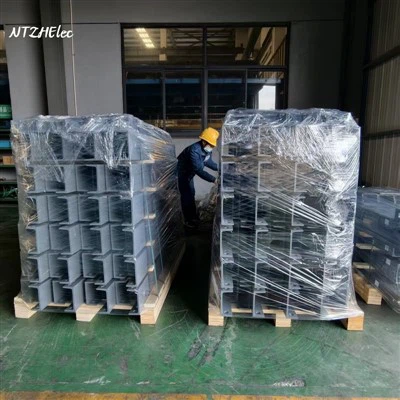
Now, if you’re not sure where your clamps stand—whether you can calibrate them, need replacement, or just want to confirm they’re in spec—reach out to us. We supply a range of transformer clamps, from manual workhorses to advanced calibrated hydraulic units, and we can walk you through a quick assessment. We’ll even help you figure out if calibration is the right call, no pressure to buy anything if it’s not needed. Don’t risk downtime or safety issues with poorly calibrated clamps—let’s get your gear back to working exactly as it should.
Corrugated Transformer Tank References
- IEEE Std C57.12.90-2015, Standard Test Code for Liquid-Immersed Distribution, Power, and Regulating Transformers, Institute of Electrical and Electronics Engineers
- NIST Handbook 133, Checking the Net Contents of Packaged Goods, National Institute of Standards and Technology
- Transformer Maintenance Best Practices, Electrical Construction & Maintenance Magazine, 2022
- Hydraulic Clamp Calibration Procedures, ASME B20.1-2018, Safety Standard for Conveyors and Related Equipment
Nantong Zhihe Electric Co., Ltd.
As one of the most professional transformer clamp manufacturers and suppliers in China, we’re featured by quality products and low price. Please rest assured to wholesale cheap transformer clamp made in China here from our factory. Customized orders are welcome.
Address: NO.202 Jianghai West Road, Hai’an Town, Hai’an City, Jiangsu Province
E-mail: colt.ntzh@gmail.com
WebSite: https://www.ntzhelectric.com/
