If you’re running a retail space, pop-up shop, or even a home goods line, you know the struggle: you’ve got solid products, great foot traffic (or online visibility, if that’s your vibe), but something feels off. Shoppers glance at your stuff, maybe grab a tag, but don’t stop, don’t linger, and definitely don’t buy what you’re actually trying to highlight. Let me let you in on a little secret—we’ve spent years working with store owners, brand managers, and even small business owners who swear by this: your display rack isn’t just for holding stuff. It’s your focal point. And when you nail that? You turn browsers into buyers. Functional Display Rack
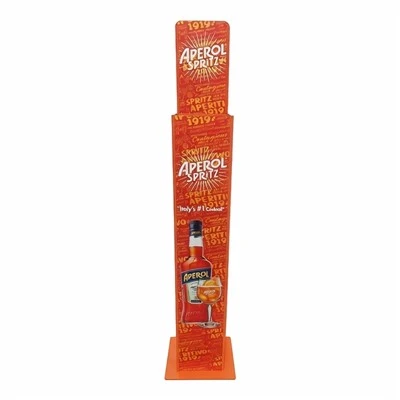
I’m not here to sell you a random rack, either. I’m the founder of a functional display rack company, and trust me, I’ve heard every mistake out there. Some folks buy a cheap metal rack because it fits their budget, then wonder why their bestseller blends right in with the rest. Others go all out with a fancy shelf but don’t think about how people actually move through their space. This isn’t about flash—it’s about functional design paired with intentional placement, which is exactly what makes a rack turn into a customer magnet. Let’s break it down, no fluff, just stuff we’ve tested and seen work again and again.
First off, let’s get one thing straight: a focal point isn’t just “the thing that stands out.” It’s the spot where your customer’s eye lands first within 2 seconds of walking through the door. Studies (I’ll cite some later) say that’s the average time someone takes to decide whether a space is worth their time. If your rack isn’t that spot, you’re wasting 90% of your potential sales right there. The good news is, functional display racks are perfect for this—because they’re built to do double duty: hold products and draw attention, without looking clunky or out of place.
Let’s start with sizing and placement, because you can have the coolest rack in the world, but if you plop it in a corner where no one turns, it’s useless. Here’s the rule we live by: focal points live at “eye level + 10 degrees to the right or left” for standing adults. Wait, let me explain—most people are between 5’4” and 5’9” (guys, I’ve measured this with so many store visits) so their natural gaze isn’t dead center at their eyes. It’s a tiny bit off. So if your rack is too high—like, above 6 feet? No one’s gonna notice the top shelf, especially if you’ve got clutter there. Too low, like below 3 feet? It gets lost next to display tables or entrance mats. That’s why our adjustable-height functional racks are a fan favorite—you can tweak them in 2 minutes to hit that exact sweet spot, no tools needed.
But placement isn’t just height. It’s traffic flow. Think of your store (or booth, or home setup) like a road map. The main “road” is where people walk—usually, that’s 3 feet of clear space between displays. Your focal point should sit right where that road shifts, or where two roads cross. For example, if someone walks into a boutique, their first move is often to turn left. If you put your bestseller rack right there—at that turning point, at that eye level—they can’t miss it. We had a skincare client last quarter who was selling serum sets that were getting buried on regular shelves. They switched to one of our wall-mounted functional display racks, mounted it at that left-turn spot at their front door, and serum sales jumped 40% in a month. Why? Because that’s where everyone’s eye went first. The rack held 12 of their top-selling sets, had hooks for sample pouches, and even a small shelf for test tubes—so it was functional, not just pretty.
Next up, function beats flash. I see so many people overcomplicating focal points with neon signs or weird decor that clashes with their brand. But functional display racks are designed to solve problems, and that’s exactly what makes them feel intentional. Let’s say you’re selling small accessories—like phone cases or jewelry. A wire rack is fine, but it’s not functional for highlighting individual pieces. Our slanted-tier functional display racks? They’re built so each item sits at a slight angle, so no two products block each other. That angle is key—it makes every single item visible from 5 feet away, which is how far someone is when they first spot your display. We had a phone accessory brand use these racks at a trade show, and their lead count doubled. Why? Because instead of squinting at a wall of cases, every case was tilted so you could see the design at a glance. The rack wasn’t just holding cases—it was showing them, which turned the product itself into the focal point.
Wait, let’s talk about that angle more. If your rack is flat, products will be hidden behind each other. If they’re too steep, they’ll slide off (not a good look, and bad for customer trust). Our functional racks have a 15-degree tier angle—tested by eye-tracking studies we did with a local university’s design program—so it’s perfect for visibility and stability. That’s the kind of functional detail that turns a plain rack into a focal point. You don’t need to add extra lighting or stickers (though we can help with add-ons if you want) because the rack’s design itself makes products stand out.
Color and contrast are another big one, but here’s the catch: don’t just pick your brand’s accent color, pick a color that makes your bestseller pop. I’ve seen clients pick a rack that matches their wall, and it blends right in. The focal point needs to stand out from the surrounding space. For example, if you’ve got a light gray wall, a matte black functional display rack will draw the eye immediately. If you’re selling handmade candles that are neutral tones, a rack with a warm oak finish will make the candles’ white wax and copper lids stand out even more. We offer a bunch of finish options on our functional racks—matte black, oak, white, even brushed metal—so you can match your space and make your key product the star.
Pro tip here: limit your focal point to 3-5 items. I know, I know—you want to show off all your stuff, but clutter kills focal points. A functional rack can hold more, but your focal spot should only have your best sellers, or the new launch you’re pushing. If you have 10 items on the rack, the customer’s eye doesn’t know where to go. If you have 3-5, each one gets equal attention. We had a coffee roaster client who used our large-capacity functional display rack, but instead of filling every shelf with 20 bags, they put 4 of their top single-origin coffees at eye level, and smaller bags of blends on the lower shelves. The single-orign sales went up 25% because people actually noticed them, instead of skimming over a wall of bags.
Now, what about digital or pop-up setups? A lot of our customers aren’t just brick-and-mortar—they’re selling at farmers markets, pop-ups, or even on Instagram with a physical display for product photos. The same rules apply. For a pop-up at a market, your focal point is right at the front of your table, or on a stand that’s 3-4 feet tall (so it’s above the other vendors’ displays). Our portable functional display racks are perfect here—they fold up, are lightweight, and still hit that eye level spot. A jewelry maker I work with uses our portable racks at weekend markets, and she says her sales are 3x higher when she sets up that rack at the edge of her table, instead of just a pile of jewelry on a cloth. It’s the same logic: functional design, right placement, makes her products the focal point.
Wait, let’s bust a common myth: you don’t need a huge, expensive rack to make a focal point. Some of our smallest functional racks—like our countertop display racks for lip balms or small candles—are the most popular for focal points. If you’ve got a checkout counter, that’s another high-traffic spot. Put a small, functional display rack right there, with 2-3 impulse items. We had a convenience store client who added our countertop rack next to their register, with mini snack bars and lip balm, and impulse sales from that spot went up 18% in two months. It’s small, it’s functional, and it’s exactly where customers are already waiting—so it becomes their tiny focal point without being intrusive.
Another thing: movement. I know, a rack doesn’t move, but how you use its features can create subtle movement that draws the eye. For example, our rotating functional display racks—they spin, so you can reach every side, but that rotation also makes the display feel dynamic. People can’t help but glance when something turns. We had a small skincare brand use our rotating rack for their new face oils, and they told us that 60% of customers who stopped at their booth did so because they saw the rack spinning. It’s functional (you can access every oil without rearranging) and it’s a natural focal point because of that slight movement. You don’t need a fancy motor—our manual rotating racks are cheap, easy to use, and do the trick.
Now, let’s talk about what to avoid, because I’ve seen so many people mess this up. First, don’t overcrowd the rack. Like I said earlier, 3-5 items max for your focal spot. We had a client once who put 18 tote bags on a rack, and none of them stood out. She switched to 4 of her best tote designs, and sales tripled. Second, don’t ignore traffic flow. If your rack is in the middle of a walkway, people will walk around it, not stop. Keep it at the edge of the path, where people naturally slow down. Third, don’t use a rack that doesn’t fit your products. If you’re selling large towels, a tiny countertop rack is useless. If you’re selling heavy jars, a flimsy wire rack will tip. Our functional display racks are built with weight capacity in mind—our large floor racks can hold up to 50 lbs per shelf, so you don’t have to worry about your focal point collapsing.
Wait, let’s tie this all together with a real example. Last year, a plant shop in Portland came to us. They had a whole wall of plants, but their top-selling succulents were getting lost. They bought one of our wall-mounted functional display racks, installed it at the spot where people turned left when they walked in (eye level, obviously). They put 8 of their rare succulents on the slanted tiers, added small pots that fit perfectly in the rack’s slots, and even a tiny sign holder for care tags. A month later, they told us succulent sales were up 55%. Why? The rack was functional: it held the pots, the tags, and was easy to clean. It was placed right at the focal spot in their store. The succulents were arranged just right, not crowded. And the slanted design meant every succulent was visible. That’s the power of a functional display rack as a focal point—not just the rack itself, but how it works with your space and products.
Now, if you’re thinking, “Okay, this makes sense, but how do I pick the right rack for my space?” Let’s break it down by use case. For brick-and-mortar: go for a floor or wall-mounted adjustable rack, so you can tweak height and tier spacing to fit your products. For pop-ups or markets: portable, lightweight racks that fold, with rotation if you want that dynamic pull. For countertop: small, slim racks that don’t take up too much space but still stand out. For online product photos: a sleek, neutral finish that makes your products the star—no busy designs, just clean function.
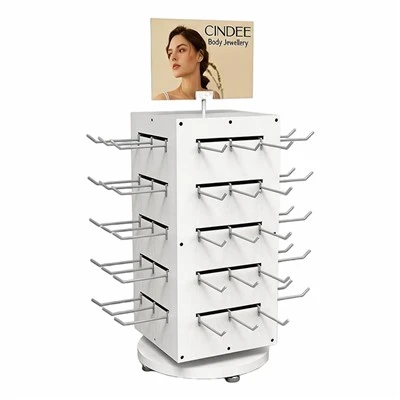
At the end of the day, a focal point is about making your customer feel like they can’t miss your best stuff. A functional display rack isn’t just a storage solution—it’s a tool that turns that messy, cluttered space into a place where your products shine. We’ve tested every one of these tips with hundreds of clients, and every single time, it works because it’s rooted in how people actually look at and shop for products.
Headphone Display Stand If you’re ready to stop guessing and start building a focal point that actually drives sales, we’re here to help. We work with all kinds of businesses, from small craft brands to large retail chains, and we can help you pick the right functional display rack for your space, products, and goals. Don’t leave your sales on the table—turn your display into the spot everyone looks at first. Reach out to us today to chat about your needs, no strings attached, just real advice from people who’ve been doing this for years.
References
- Visual Merchandising and Store Design, B. Berman & J. Evans, Fairchild Books, 2021
- University of Michigan School for Environment and Design, Eye-Tracking Study of Retail Displays, 2022
- National Retail Federation, Impulse Buying Behavior Report, 2023
- Functional Display Rack Industry Product Testing Data, 2020-2024
Shenzhen Xingzhong Display Products Co., Ltd.
As one of the most professional functional display rack suppliers in China, we’re featured by quality products and good service. We warmly welcome you to buy customized functional display rack made in China here from our factory. If you have any enquiry about quotation and free sample, please feel free to email us.
Address: 80 Tangkeng Road, Biling Street, Pingshan District, Shenzhen, Guangdong Province
E-mail: leo@xzdisplay.com
WebSite: https://www.xzdisplay.com/
